A market visit can be a meal, a look at a building, a shopping stop or simply time spent noticing how a city works. Decide which of those interests brings you there. It helps you ask more useful questions and approach a working place with a little more attention than a quick photograph allows.
Name the place precisely
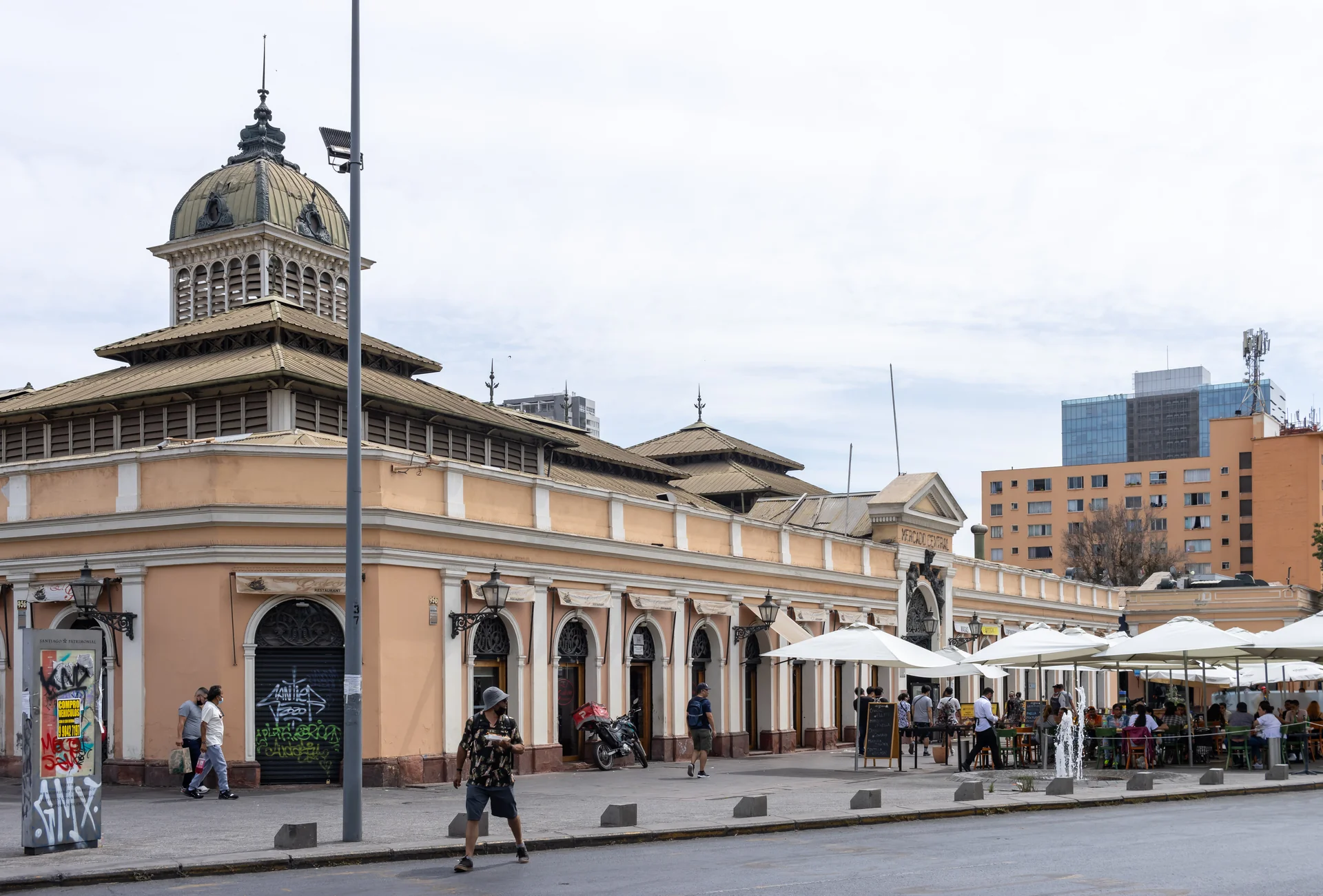
The photograph on this page shows the exterior of Mercado Central de Santiago in January 2022. Its architecture and street activity belong to that particular place and date. It is not an image of every Santiago market, and the visible businesses or arrangements should not be read as a current directory.
Use the market’s name and actual location when planning the journey. Broader labels such as the center or a food district are useful for orientation, but they do not identify an entrance or establish what is available today. Check current information before building a day around a particular stall, restaurant or service.
Give a meal its own place in the day
Chile Travel’s gastronomy guide distinguishes Bellavista, Lastarria and El Golf as different dining settings. That comparison is a reminder to consider the kind of outing you want alongside the food itself. A meal in one district may connect naturally with the rest of your day; another may deserve a separate journey.
Look at the current menu, the stated price and the service arrangements before choosing. If a detail matters to you, ask the business directly. An old photograph, a general guide or a nearby landmark cannot answer a specific question about today’s offering.
Observe the work as well as the display
Markets and surrounding streets are places where people earn a living. Keep paths clear, notice when staff are busy and ask before making close photographs of people, food preparation or a stall. An attentive visit can include looking and listening without assuming that every activity is a performance for visitors.
There is no need to turn every stop into a purchase. It is still useful to be clear about whether you are browsing, asking a question or choosing something. Ordinary courtesy often makes the encounter easier for everyone.
Compare arrangements rather than promises
- For an independent visit, identify the exact place and the journey there and back.
- For a guided experience, read the named stops, meeting point and inclusions.
- Check whether a meal or tasting is included or arranged separately.
- Leave room for a change if the place or offering you expected is unavailable.
A market can provide the central chapter of a day without filling every hour. Pair it with one nearby interest, then let the rest remain flexible. The goal is a visit that fits the setting and your attention.
Read Chile Travel’s comparison of Santiago dining neighborhoods and its heritage-neighborhood guide for broader context. Current business and provider information should supply the final practical details.
Experiences to explore
 Explore experience ↗
Santiago city experience: Walking tour, Market visit, Lunch & Coffee included
◷ 7 hr
Enjoy a different private city tour of Santiago as you explore and visit the main cultural and tourist attractions by metro and bus.
See dates for Current pricing
View dates Explore experience ↗
Private Santiago Museum Tour with Lunch at Central Market
◷ 8 hr
This private cultural experience combines three of Santiago’s most important museums with a traditional lunch at the Central Market. Ex
See dates for Current pricing
View dates Explore experience ↗
Private Santiago Drinks & Snacks: Market, Lastarria & Bellavista
◷ 4 hr
Discover Santiago through its traditional drinks and local snacks on this private experience. Start at the iconic Mercado Central with
See dates for Current pricing
View dates