A museum day works best when the collection has room to hold your attention. Start with the subject you want to spend time with, then choose the surrounding stops. Santiago’s cultural institutions and neighborhood settings offer different kinds of experience; the useful comparison is what you hope to see and understand, not how many doors you can pass through.
Start with the institution
Chile Travel’s cultural guide provides an introduction to museums and the neighborhoods around them. Use it to make an initial shortlist, then move to each institution’s own information. A general destination guide cannot establish today’s exhibitions, entry arrangements or access conditions. Those details belong with the museum.

Santiago Skyline: Cable Car & San Cristobal Walking Tour
Discover Santiago from above on our Skyline Santiago: Explore San Cristóbal by Funicular & Cable Car tour! Start in vibrant Bellavista, home to color...

Santiago to Cruise Port via Valparaíso, Viña & Casablanca (Max 4)
Make the most of your day before boarding your cruise with this full-day small-group tour for a maximum of 4 passeng...

Tour of Santiago with Professional Photography
Discover Santiago de Chile through a walking tour of its most iconic neighborhoods, where history, architecture and...

Custom Private Walking Tour in Santiago with Local Guide
See Santiago through a local lens on this private walking tour. After booking, you’ll receive a short online Perso...
The Museo Chileno de Arte Precolombino is one example of a visit that benefits from reading ahead. Its own website is the appropriate place to learn about the collection and plan the visit. Let that specific subject determine the time you set aside, rather than assuming that every museum can fit into the same short slot.
Leave space before and after
A useful museum plan includes more than the time inside. Allow for finding the entrance, checking practical arrangements and arriving without a rushed connection. Afterward, a nearby walk or quiet pause can give the visit a different ending from immediately moving into another collection.
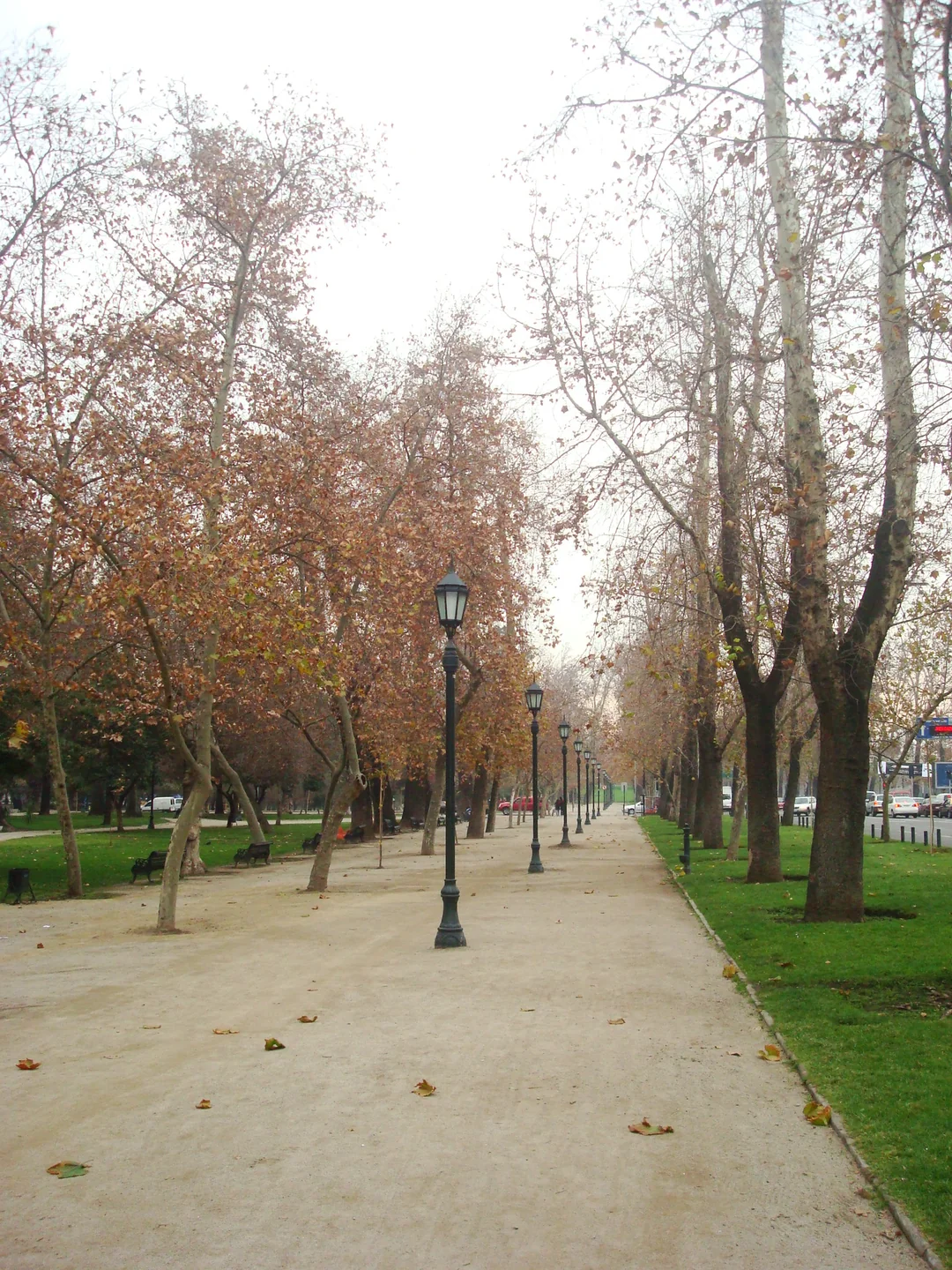
The Parque Forestal photograph shown here is a historical street-level view from June 2009. It illustrates one kind of public-space setting within the city; it does not establish a museum entrance, a current route or the conditions you will encounter. Keep the image and the practical plan separate.
Compare a few meaningful details
- The collection or current exhibition that draws you to the institution.
- The actual address and public entrance, not only a neighborhood name.
- The institution’s current visitor information and any arrangements you need.
- The distance and transport connection to the next stop.
- Whether a second museum complements the first or competes for the same attention.
A smaller shortlist makes these comparisons easier. If two institutions interest you equally, consider visiting them on different days. The city around each can become part of the experience, instead of a gap to hurry through.
Keep the surrounding neighborhood in view
Cultural buildings sit within working streets. A meal, a public space or a neighborhood walk may be a better companion to a collection than another major attraction. Choose the connection that suits your interests and the time available. If you arrange a guided visit, compare the stated subject, meeting point and inclusions rather than assuming that similarly named experiences cover the same material.
Consult Chile Travel’s cultural introduction and the Museo Chileno de Arte Precolombino’s own website. The neighborhood guide can help give the rest of the day a clear focus.
Experiences to explore
 Explore experience ↗
Walking Tour of Santiago and Surrounding Areas
◷ 4 hr
Dynamic and cultural tour. Strong accent in the city center on topics such as: history , architecture, general culture , politics, econ
See dates for Current pricing
View dates Explore experience ↗
Private Full-Day Bike Tour of Santiago Cultural 5-6 hrs
◷ 6 hr
Get a street-level view of Santiago’s historic sites, neighborhoods, and parks on a 6-hour, private bicycle tour. This full-day Santiag
See dates for Current pricing
View dates Explore experience ↗
Santiago: Food and Cultural Walking Tour
◷ 3 hr
Discover Santiago’s culinary scene on a guided food tour. Taste traditional dishes like empanadas and seafood, sip on local drinks, and
See dates for Current pricing
View dates